Introduction to Tennis
Tennis is one of the most popular racket sports in the world. It combines physical fitness, concentration, strategy, speed, and skill. People of different ages enjoy playing this sport in schools, clubs, parks, and professional tournaments. Some play for fun and exercise, while others train seriously to compete at national and international levels.
One of the best things about this sport is that beginners can start learning with a racket, a ball, and a suitable court. As players improve, they can develop stronger serves, more accurate shots, faster movement, and better match strategies.
Professional competitions attract millions of viewers, and famous athletes inspire young players to improve their performance. Major tournaments also bring together competitors from different countries and backgrounds.
In this guide, you will learn about the history of the game, its basic rules, court surfaces, important skills, famous players, health benefits, and practical tips for beginners.
What Is Tennis?
Tennis is a racket sport in which players hit a ball over a net into the opponent’s court. The objective is to win points by making shots that the opponent cannot return successfully or by forcing the opponent to commit an error.
The game can be played as singles or doubles. Singles involves one player on each side, while doubles involves two players on each side.
Players use a racket to serve, return shots, and move their opponents around the court. Success depends on accurate technique, physical fitness, quick reactions, and smart decision-making.
Unlike sports that focus mainly on strength, tennis requires a balance of power and control. A carefully placed shot can sometimes be more effective than a very powerful one.
History of Tennis
Modern tennis developed from earlier racket games played in Europe. The sport known as lawn tennis became popular in England during the nineteenth century.
Major Walter Clopton Wingfield helped popularise an early form of lawn tennis in 1874. The game developed rapidly, and organised competitions helped establish more consistent rules.
In 1877, the first Wimbledon Championships were held in London. Wimbledon became one of the most famous tennis tournaments in the world and helped shape the development of modern competition.
As the sport spread internationally, national associations and international organisations helped standardise rules and organise events. Tennis later became an important part of the Olympic programme, although its Olympic history includes periods when it was not contested.
Today, professional tours, junior competitions, school programmes, and recreational clubs make the game accessible to players around the world.
Basic Rules of Tennis
Understanding the rules makes it easier for beginners to enjoy the sport and follow professional matches.
1. Serving the Ball
Each point begins with a serve. The server stands behind the baseline and hits the ball diagonally into the opponent’s service box.
Players normally receive two attempts to make a valid serve. If both attempts fail, the server commits a double fault and loses the point.
A serve that touches the net but lands in the correct service box is generally called a let and is replayed under standard rules.
2. Scoring Points
Tennis uses a scoring system that differs from many other sports. In a traditional game, points progress through love, 15, 30, 40, and game.
If both players reach 40, the score is called deuce. Under the standard advantage system, a player must win two consecutive points from deuce to win the game.
Some competitions use alternative formats, so the exact scoring procedure may vary.
3. Winning Games and Sets
A set usually requires a player to win six games with a lead of at least two games. When the score reaches six games all, a tiebreak is commonly played, although the format depends on the competition.
Matches may be played as best of three sets or best of five sets. Many women’s singles matches and most tour-level matches use best-of-three formats, while some men’s Grand Slam singles matches use best of five.
4. Keeping the Ball in Play
After the serve, players generally take turns returning the ball before it bounces twice on their side. The ball must land within the appropriate court boundaries.
If a player hits the ball outside the permitted area, fails to return it, or allows it to bounce twice, the opponent normally wins the point.
5. Singles and Doubles Boundaries
Singles uses the narrower court boundaries, while doubles includes the wider side alleys.
Players must also follow serving order, receiving positions, and other rules specific to their match format.
6. Foot Faults
A foot fault occurs when a server breaks the rules governing foot placement during the serve. For example, stepping on or beyond the baseline before hitting the ball can result in a fault.
Learning the serving rules helps players avoid unnecessary errors.
Different Types of Tennis Courts
Court surfaces influence the speed and bounce of the ball. Players often adjust their tactics depending on the surface.
Grass Courts
Grass courts generally produce a relatively low and fast bounce. Players who serve effectively and move forward to the net may benefit from these conditions.
Wimbledon is the best-known Grand Slam tournament played on grass.
Clay Courts
Clay courts tend to slow the ball and produce a higher bounce. Longer rallies are common, and players often need patience, stamina, and strong defensive movement.
The French Open, held at Roland-Garros, is the most famous clay-court Grand Slam tournament.
Hard Courts
Hard courts usually offer a more consistent bounce and a balanced playing experience. They can reward a wide range of playing styles, including aggressive serving and baseline rallies.
The Australian Open and US Open are played on hard courts.
Indoor Courts
Indoor tennis is played in covered facilities. Indoor conditions can reduce the effects of wind and rain, helping players concentrate on their shots and movement.
The surface itself may be hard or another approved court material, depending on the facility and competition.
Essential Tennis Skills Every Player Should Learn
Developing strong fundamentals is the foundation of successful play. Beginners should focus on correct technique before attempting advanced shots.
Serving
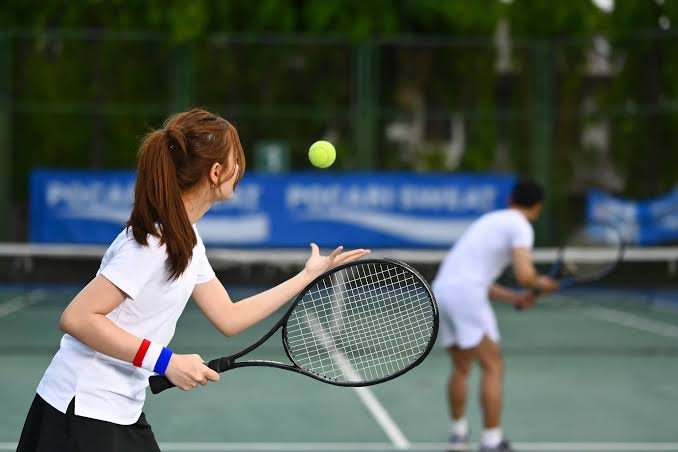
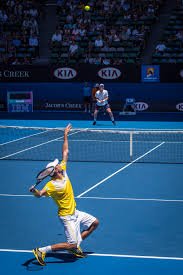
The serve starts every point and can create an immediate advantage. Players should practise their ball toss, body balance, racket movement, and contact point.
A consistent serve is often more useful for a beginner than a powerful serve that regularly misses the target.
Forehand
The forehand is a groundstroke played on the player’s dominant side. It is commonly used to attack, control rallies, and move opponents away from comfortable positions.
Practising the correct grip, footwork, and follow-through helps improve consistency.
Backhand
The backhand is played on the opposite side of the body from the forehand. Players may use a one-handed or two-handed technique.
Both styles can be effective. The best choice depends on comfort, training, and playing style.
Volley
A volley is a shot played before the ball bounces. It is often used near the net to finish a point or redirect the ball quickly.
Good volleys require controlled racket movement, balanced positioning, and quick reactions.

Enjoy the Learning Process
Improvement does not happen overnight. Focus on progress instead of comparing yourself with experienced players. Every practice session is an opportunity to learn.
How Technology Is Changing Tennis
Technology has influenced professional competition, player training, and the way fans follow matches.
Electronic line-calling systems can help determine whether balls land inside or outside court boundaries. Video analysis allows coaches to study serving technique, shot selection, and movement.
Performance-tracking tools can also provide information about movement patterns and training loads. These insights help players and coaches identify areas that may need attention.
Online streaming, mobile applications, and social media make tournament schedules, results, highlights, and interviews easier to access.
Although technology has improved many aspects of the sport, consistent practice, good coaching, and sound decision-making remain essential.
The Future of Tennis
The future of the sport depends on making participation accessible, supporting young athletes, and encouraging wider interest in professional and recreational competition.
Youth programmes introduce children to basic skills, while community courts provide places for people to practise and socialise. Women’s competitions and international events continue to inspire new generations of players.
Improved coaching resources and digital training tools may also help athletes learn more efficiently. Meanwhile, professional tours will continue to attract attention through exciting rivalries and major championships.
The sport’s combination of physical challenge, individual responsibility, and social interaction gives it lasting appeal for people of different ages and skill levels.
Frequently Asked Questions (FAQs)
What is the main objective of tennis?
The main objective is to win points by hitting the ball into the opponent’s court in a way that prevents a legal return. Players aim to win the required number of games and sets to win the match.
How many players can play?
Singles matches involve two players, one on each side. Doubles matches involve four players, with two on each team.
How does scoring work?
A standard game uses love, 15, 30, 40, and game. At deuce, players usually need to win two consecutive points to take the game under the advantage system.
What equipment is needed?
The basic equipment includes a racket, tennis balls, suitable sports shoes, comfortable clothing, and access to a court with a net.
Which surface is best for beginners?
Any safe, well-maintained surface can work for beginners. The best option depends on local availability, comfort, and access to suitable coaching.
Is tennis a good form of exercise?
Yes. Regular play can support cardiovascular fitness, coordination, balance, and muscular endurance. Beginners should build their activity level gradually.

Which surface is best for beginners?
Any safe, well-maintained surface can work for beginners. The best option depends on local availability, comfort, and access to suitable coaching.
Is tennis a good form of exercise?
Yes. Regular play can support cardiovascular fitness, coordination, balance, and muscular endurance. Beginners should build their activity level gradually.
What are the four Grand Slam tournaments?
The four Grand Slam tournaments are the Australian Open, French Open, Wimbledon, and US Open.
Can children learn tennis?
Yes. Children can learn with age-appropriate rackets, softer balls, and smaller courts when available. Proper instruction helps make the experience safe and enjoyable.
Conclusion
Tennis is a rewarding sport that combines skill, fitness, concentration, and strategy. From its development as lawn tennis in the nineteenth century to today’s international tournaments, it has become an important part of global sports culture.
Whether you want to improve your fitness, learn a new skill, compete with friends, or work toward professional competition, you can begin with the basics and improve through consistent practice.
Learn to serve, develop reliable groundstrokes, improve your movement, and stay patient as you progress. Respect your opponents, enjoy every rally, and celebrate small improvements along the way.
The best way to experience the sport is to pick up a racket, find a suitable court, and start playing.